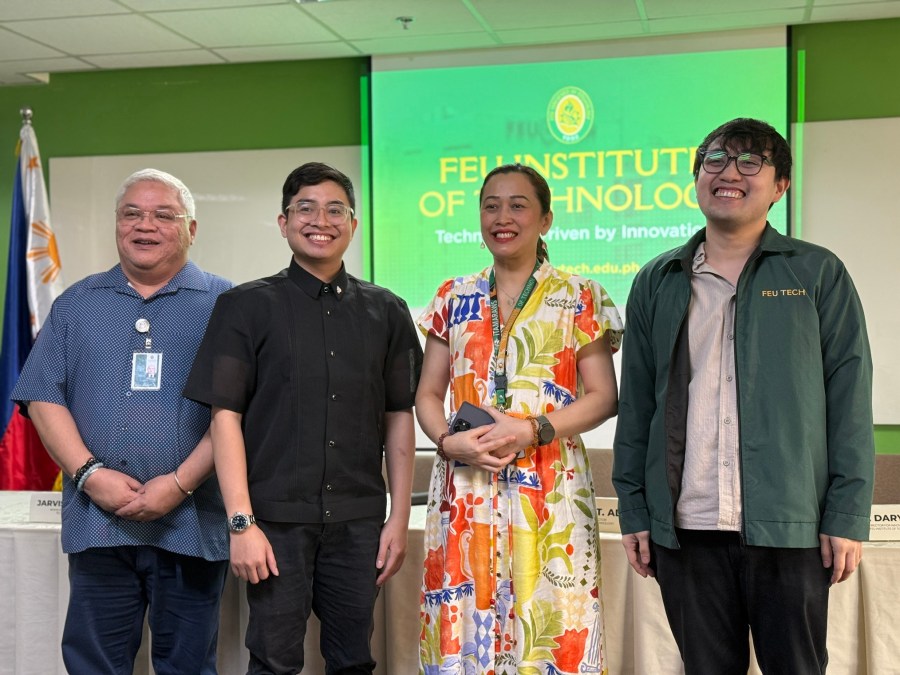
When you hear the word “military”, the first images that come to mind usually involve national defense, physical training, and tactical field operations. So when Far Eastern University (FEU) hosted the latest leg of the InnoVision 2026 Campus Series, many attendees were left asking a fundamental question: Why is a student innovation forum focusing on “Military IT Convergence”?
The answer, according to organizers and academic leaders at the June 17 event held at the FEU Tech Innovation Center in Manila, lies in a broader vision for country’s future.
“Through this partnership with the Philippine Coding Camp (PCC), we want to help improve the research capabilities of the Philippine Military Academy (PMA) and the Armed Forces of the Philippines (AFP) in terms of nation-building,” explained Justin Muyargas, FEU Senior Director for Student Success. “We see ourselves as an instrument. There are other educational institutions helping PCC to build the country’s capabilities, and it’s really about sharing what we can on our part. We are completely open to partnerships that push nation-building forward.”
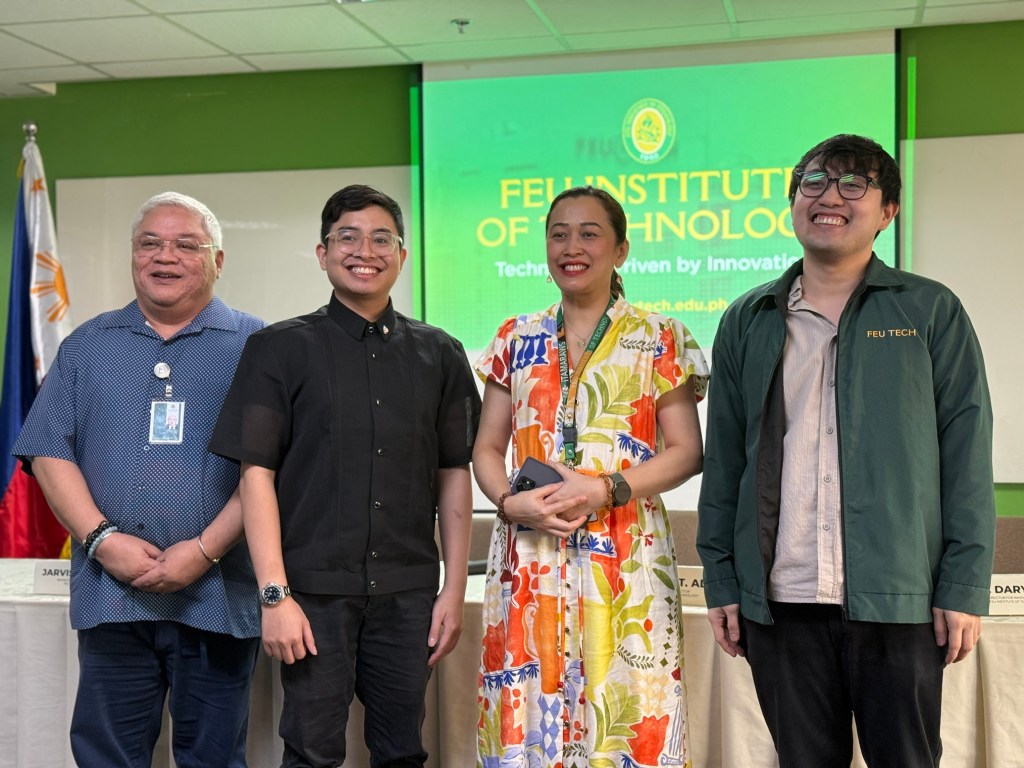
The forum served as the backdrop for a major announcement: a joint initiative between the Philippine Coding Camp, FEU Institute of Technology (FEU Tech), and the FEU Tech Innovation Center. Together, these organizations are launching programs aimed at giving students, researchers, and public sector personnel direct access to training in emerging fields like artificial intelligence, cybersecurity, data analytics, and autonomous systems.
Changing the Conversation on AI
The move into military territory marks a significant evolution for the InnoVision series, which began in February 2026 with stops at De La Salle University and Lyceum of the Philippines University. Those earlier events focused primarily on basic AI awareness among students, but they also exposed a deeper challenge: widespread institutional anxiety about how to handle new technology.
Dr. Gabriel Sampedro, CEO of Philippine Coding Camp and GS Solutions OPC, noted that shifting the mindset of highly structured organizations like the military requires tackling their core concerns head-on.
“When we talk about the military, they value integrity above all else,” Dr. Sampedro said. “And when people talk about AI, there is often an immediate notion that it’s equated to cheating.”
To address this, PCC previously brought in the UNESCO chair for AI use from Asia Pacific University in Malaysia to speak directly with the Philippine Military Academy. The goal was to pivot the conversation away from fear and toward practical adoption.
“Right now, we’re considering adjusting their framework,” Dr. Sampedro shared. “Because let’s face it, AI is here to stay and you can’t realistically prohibit it. If we stop people from using AI, we’re basically stopping progress.”
Dr. Sampedro also pointed out that current university policies rely too heavily on flawed policing methods, such as software that claims to detect specific percentages of AI-generated text.
“These rules are pretty much inaccurate,” he said. “If you run the Philippine Constitution through an AI flagging system, it will likely tell you it’s 100% AI-generated—but obviously, AI didn’t exist when it was written. Our passion with InnoVision is simply starting the conversation and helping people change their mindset. If we want to upgrade our educational system and upskill our students, we have to embrace technology rather than reject it.”
Bringing Global Insights to Local Defense
The FEU forum emphasized that modernizing public service and defense requires training people, not just buying new equipment. PCC has been actively working with uniform personnel to build practical skills in software quality assurance, data-driven workflows, and digital tools.
To bring international perspective to the Manila leg, the event featured insights from two global experts:
Dr. Artem Lensky from UNSW Canberra at the Australian Defence Force Academy, who specializes in teaching surveillance and communication systems to military officers.
Dr. Steve Chan, a science and technology adviser and researcher who has worked extensively with ASEAN Member States, the United Nations, and international tech forums.
Both speakers shed light on how modern defense sectors use open-source intelligence, data analytics, and information networks to handle real-world public safety and security challenges.
Moving From Classroom Ideas to National Impact
While the student turnout was highly enthusiastic—with Dr. Sampedro noting that participants genuinely enjoyed discovering the practical possibilities of AI—the FEU stop proved that the InnoVision series is growing into something larger than a standard campus tour.
By connecting academic institutions like FEU Tech with organizations like the AFP, DOLE, and DOST, the initiative is attempting to bridge the gap between classroom theory and national readiness.
Looking ahead, the partnership expects to roll out a continuous pipeline of workshops, joint research projects, and student innovation programs. The ultimate goal isn’t just to teach coding, but to cultivate a generation of innovators who can build a more secure and technologically self-reliant Philippines.
Watch our video coverage from the media conference below:
 HYPE MANIA